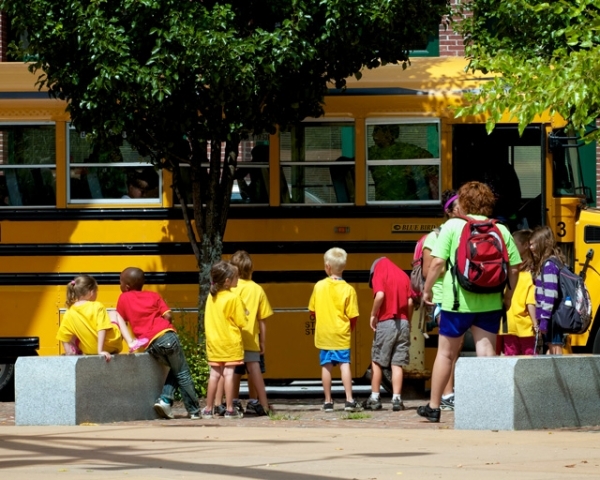
Is your child ready to take the first step on his academic ladder? While it's true that many kindergartens have become more academically rigorous than previous generations, the good news is that the skills he will need to acclimate and thrive haven't changed much. Kindergarten readiness is about balance, both academic and social, behavioral and mental. Here are eight parenting tips to get your little one ready.
1. Pique curiosity
A willingness to learn is much more important than what a child may already know at this age. Is your child enthusiastic about learning? To encourage his curiosity, expose him to new and interesting things. The beach, museum, zoo, park and library all present wonderful opportunities for exciting discoveries.
2. Ability to pay attention
There's no better way to increase a child's attention span than by reading to him. Read to him everyday, even if your child seems to squirm with worms in his pants and his mind seems to wander after you've uttered the first sentence. Choosing books that align with your child's interest will help keep him focused. So will following up parts of the story with questions. But engage more than his mind. Let him hold the book, flip pages, point to pictures and words. This will get your child comfortable with concepts about print, an important early literacy skill.
3. Follow directions
If your child is not used to a structured classroom, simulate one by giving him simple procedures. Kindergarteners are expected to follow two-step instructions like wash hands then grab your lunch, or wait until the teacher's done speaking before asking questions.
4. Encourage Independence
A certain level of self-sufficiency is expected in a kindergarten classroom. He will need to go to the bathroom by himself, open up his lunch by himself, feed himself, and put on his own shoes. So encourage independent habits at home before the big day. Try these 6 tips for easing first day jitters and separation anxiety.
5. Learn social skills
Kindergarten is as much about getting along with other children as it is about learning. The only way kids will learn to share, take turns, be patient and learn empathy is by playing with other children. So it's important to provide opportunities where your child can interact with other peers. Does your child prefer big open group settings or smaller intimate ones? Set up play experiences that tailor to your child's personality.
6. Language and math skills
Most children turn into little chatterboxes by this age. While speaking may not be a problem, get your child used to hearing a wider vocabulary. Speak to him like an adult about child-appropriate topics or even about your day-to-day. Kindergarteners should also be able to count to 10 and understand the concept of addition and subtraction. If you have five coins and take one away, how many do you have? These are all activities you can do at home.
7. Fine Motor skills
Many kindergarten activities involve coloring, cutting, pasting, writing with a pencil, making play-doh and stringing beads. These are also fun, quality-time activities for the home. Practicing these fine motor skills with your child will empower him when he's instructed to participate in these activities at school.
8. Gross motor skills
Research shows that being active helps kids focus better. Balance out your child's day with a healthy dose of unstructured outdoor play. Let him ride bikes and run around and be a kid.
If a traditional kindergarten isn't right for your child, remember that there are alternatives like un-schooling, homeschooling, and Montessori education.