Many life skills just can’t be learned in the classroom. They require the active and conscious involvement of a parent. Being involved in sports and other extracurricular activities can help tremendously, but having them enforced in a child’s daily life at home will be essential in making these skills stick. Here, we outline twelve essential life skills that will help your child to navigate life with success, whatever success might mean to them.
1. Learn to introduce yourself
Meeting someone for the first time, or being the new kid in school is scary. But if your child knows how to introduce herself and get at least a small conversation going, it may be all the confidence needed to forge new friendships and create a foundation on which to build future networks. Introducing yourself is simple enough, but there is a technique to it.
For starters, teach your child to smile, make eye contact, say her name clearly without mumbling, and follow up by saying something nice about the other person such as, “I like your shirt.” Like everything else in life, remind your child that she will become better at it with practice.
2. Learn to be happy alone
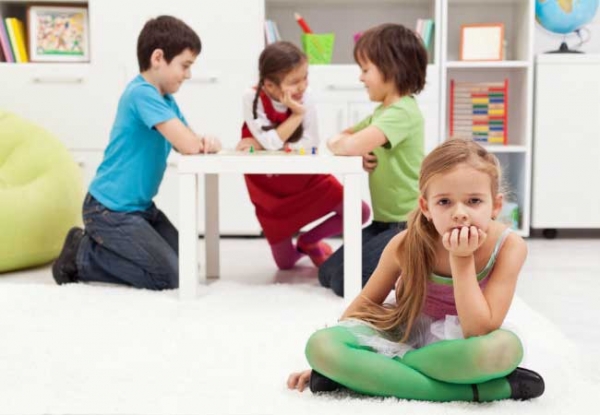
Parental instincts might make us prone to coddling our kids. As tempting as it is to relieve them from the discomfort of loneliness, allow your child the opportunity to comfort himself when he feels left out. Otherwise he may grow up not knowing how to be happy alone, becoming codependent in relationships, and maybe even engaging in unhealthy activities just to be accepted. If a child learns to entertain himself through art or leisure sports, he will be on his way to master one of life’s most valuable skills.
Teaching a child to be happy alone requires more than leaving a child unattended. A child needs a fortified support network, so that when he does get left out, he can take comfort in knowing he is loved and accepted elsewhere. Avoid placing all of his eggs in one basket. Encourage your child to build a support network of family and a diverse set of friends — from school, the neighborhood, and extracurricular activities, too.
3. Learn to say no
It’s important to know how to say no politely. You can’t make everyone happy, and it’s perfectly okay to disappoint someone, especially when your beliefs, safety, or identity are compromised.
4. Learn to ask
When we’re young, our natural instinct is to ask questions and ask for help. As we grow older, we become self-conscious and fear the rejection that can come from asking too many questions. Re-learning this skill enables a child to approach people but also to question them, even those in authority, instead of passively accepting something they may disagree with.
The next time your child wants a different color balloon, encourage him to ask for himself. And the next time he’s at a doctor’s office, encourage him to address any concerns or ask questions for himself. When he does ask questions, reward your child instead of discouraging him (you might be surprised how many adults discourage questioning!).
5. Learn to be heard
Oftentimes, it’s not what you say but how you say it that gets you heard. When my daughter told me about rough play at school, I asked her to demonstrate how she’d asked the boys who were bothering her to stop. Lo and behold, she had a smile on her face, was swinging her arms playfully, and not making eye contact when she said, “Please don’t do that.” I showed her that if she wasn’t stern, they wouldn’t be convinced of her seriousness.
6. Learn to listen
Listening skills develop with age, of course, but every child can start by making eye contact with the person who is speaking to them. Teach your child the value of hearing what others have to say and why their opinions will be better heard when they first seek to understand.
7. Learn to wait
In the famous Marshmallow Test, which was started in the 1960s by Dr. Walter Mischel but has since been replicated many times, four year olds were asked whether they wanted one marshmallow now or two marshmallows later. The study revealed that those who waited longer for their marshmallows were also able to pursue other goals more successfully. As adults, the children who were able to wait longer achieved a higher education level, were less likely to engage in bully behavior, and reported less drug use. While the children who did not wait were in no way doomed for life, the study points to the significance of the life skills of focus and self- control for children.
How do kids learn to be patient? Rather than resist the urge to eat the marshmallow, these children distracted themselves by turning their backs to the marshmallows, sat on their hands, played with toys in the room and even sang songs to themselves. In a real life application, delayed gratification could mean making your child wait for a treat at the end of the day, after dinner.
8. Learn to face your fears
When your child is afraid of something, it’s easy to simply tell them that they have nothing to worry about. But refusing to acknowledge your child’s fears is very belittling.
Confronting your fears, however, is an empowering learned skill that requires a multi-step approach. First, you must ask questions to get to the root of your fear. Secondly, you have to focus on what you can control and learn to let go of what you can’t. Finally, it may require asking for outside help—which, in and of itself, is a fear for many (see #4).
When my daughter was frightened of going to her kindergarten class each morning, I sat her down and asked her what she was afraid of. Her answers were vague at first, but eventually we got at the root of the issue: she didn’t know who to talk to before class started and this intimidated her.
We solved her problem by making a strategy about who she could talk to and what she could talk about. We came up with a couple of names in case a particular friend wasn’t feeling responsive that morning. After figuring out what her exact fears were, not only could she better assess whether or not her level of fear was warranted, but we found a solution by focusing on those factors she had control over. This proved to be way more effective in calming her than simply telling her she had nothing to worry about.
9. Learn to be tolerant
Too often we grow up in or create an insulated environment by surrounding ourselves with people who are mostly like us. When our kids finally come into contact with people who are different, it can be uncomfortable — shocking, even. Exposing your kids to others with different cultural backgrounds will provide them the opportunity to become more respectful and tolerant of other people and their experiences. In other words, they will have open networks, a topic we covered in 7 Things Creative Children Do Differently.