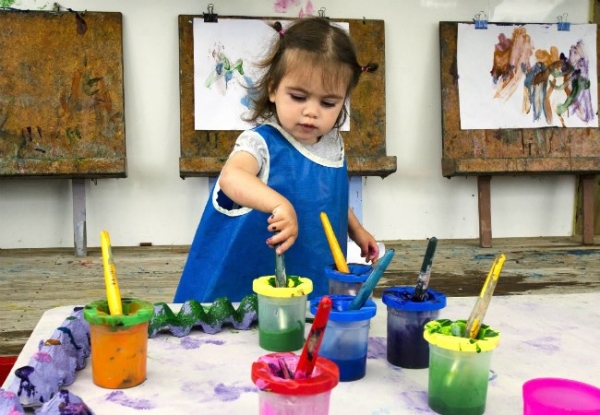
Creativity has an array of positive benefits for children and is critical for well-being and proper development. There is no right or wrong way to be creative. Being creative allows children to express themselves, take risks, and try new ideas without (hopefully!) the fear of judgment. It helps children discover their talents, grow confidence, be authentic, think critically, relieve stress, improve problem solving skills, and so much more. This is all great news, but many parents complain that their children spend the days watching YouTube or playing video games and aren’t letting their creative juices flow.
For this reason, it’s important to design a home environment that fosters your child’s creativity. You can do this by focusing on two areas: the physical environment and the emotional environment. Let’s look at each area to see how to spark or boost creativity in your home.
The Physical Environment
As you’ve probably guessed, it’s not enough to have crayons and paper lying around somewhere. Without some kind of order and organization, it’s difficult for kids to initiate creative activities on their own. I recommend creating two distinct areas - one for reading and another for art and creative play.
Reading Space: Find a small and cozy spot in your home to create a special reading nook. A fort-like area with twinkle lights, comfy pillows, a favorite blanket, and a basket of books will draw most children in like a moth to a flame. Having their own special, magical place to go is exciting and is sure to create fond memories along with improving creativity.
Science shows that reading improves creativity by stimulating your imagination. Neuroscientists at Emory University found that reading a novel improves brain function and detected what may be biological traces, actual changes in the brain, that linger days after reading a novel.
Art/Creative Play Space: For some children, this will just be reams of paper and organized art supplies such as pencils, pens, erasers, and crayons. Others prefer painting, origami, puppetry, comic making, crafting, or music. The key is to make a designated area where his or her supplies are all organized and easily located. My son used a desk in his bedroom to create his crafty projects such as foam people and custom robots. However, when his desk got taken over by his school books when the schools closed for the pandemic, I noticed that he stopped crafting. He made a remark that he wanted to finish a project he’d been working on but his desk was covered in school books and I offered to let him use the dining room table. “Nah,” he said, “it’s not the same. All my supplies are in my room.” This proved to me that the designated space was integral to his creativity.
The Emotional Environment
As important as it is to have a physical environment conducive to creativity, it’s equally important to create the right emotional environment. This means fostering a home environment that encourages and values creativity and that minimizes criticisms and judgment of one’s creative endeavors. It’s easy to see how being critical of a child’s art work or performance can kill creativity, but even positive judgments can be harmful. When you praise the product instead of the effort, kids learn to place a value judgement on their work not based on their own likes and expressions but on what is pleasing to you. Therefore, their own creativity is stifled. In addition, some children may start to create purely for praise and not for their own enjoyment.
For example, let’s say Annie’s teacher holds up her drawing to the class and says, “Everyone, look how beautiful Annie’s drawing of the garden is.” The other children then try to copy Annie’s picture to win that same kind of praise rather than using their own styles and ideas. Their creativity was hampered so they could copy the “worthy” drawing.
Instead, you might say something like:
- “You’ve been working so hard on it and you finished!”
- “I see you’ve mixed red and blue together here to make purple. What a great idea!”
- “You put a lot of time and work into this. Look at how special it turned out.”
- “This is really unique and totally you. I can tell you enjoyed creating it.”
Of course, another key element to creating a positive and creativity-boosting home environment is to enjoy being creative yourself. Let your children see you dance, sing, draw, paint, write, sew, or whatever it is that brings you joy. Children learn best by watching us, and they are always imitating what they see us do. Let them see us create with joy!