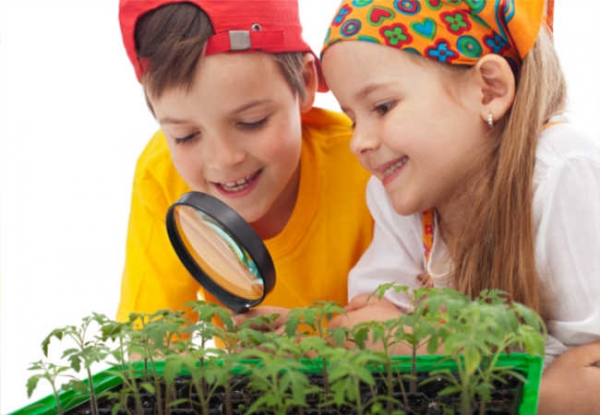
The sun is shining. Birds are singing. The trees are coming back to life. Spring has finally sprung, and with it comes new opportunities for some fun spring-themed science activities! These 5 easy and fun activities are sure to enthrall young audiences as they learn about exciting things like the stages of seed growth, the metamorphosis of a tadpole, and what causes rain! When we bring education to life, children will be inspired to keep learning!
Eggshell Planters
Gardening has lots of benefits for children. It engages their senses, teaches them about plant life, encourages healthy eating, and enhances fine motor development just to name a few. Growing seeds in eggshells is a great little beginning gardener project that demonstrates the stages of seed growth. You’ll need egg shells, soil, seeds, and water for this experiment. First, you’ll want to set up your eggshells in the carton and add soil to each one. Next, push one seed gently into the soil of each eggshell and cover with dirt. Then, spray lightly with water to dampen the soil. Be careful not to overdo it. After a few days, look at the seeds and observe the changes in them. Cover them back up and check back every few days.
Raising Tadpoles
Looking for a fascinating backyard science project that teaches responsibility too? Consider raising tadpoles. It’s simple to do and rewarding to observe the metamorphosis. Note: It’s important to release the frog back in the place you collected the tadpole from. Never release it into a new environment. For this project, you'll need a tank or aquarium, food such as spinach and frog food as they get older. Then, of course, you’ll need tadpoles. You can usually find them in ponds in April or May. If you find an egg clutch, fill your tank with water from the pond you found them in. The scummy water will help keep them healthy. Once your tadpoles have hatched, you’ll need to feed them. You can find tadpole food online, or you can pull some weeds from your garden by the roots or boil spinach. Just make sure anything you use is pesticide free. Tadpoles can eat about a teaspoon of greens per day. Clean your tank once a week and fill with new pond water or tap water treated with aquarium drops. Once your tadpole is a frog, release him back where you found him and wish him well!
Make Homemade Watercolors from Fresh Flowers
Gather some vibrantly colored flowers from your garden, neighborhood, or from the store and pull the petals off. Put the petals from each flower in a separate ziploc bag and then add warm water to each bag and zip up. Leave the flowers and water to sit for a couple of hours. Observe which color flower made the most vibrant water. Pour the water from the baggies in small cups. Get your brushes and blank paper and paint using your homemade watercolors.
Grow a Grass Head
Your child will have a blast cutting, trimming, and styling the grass hair on their very own grass head. I saw this on redtedart.com and I think it’s the cutest experiment. You’ll need stockings, some compost or earth, grass seeds, rubber band, and googly eyes for decorating, plus a pot for your grass head to sit in. Place 2 to 3 tablespoons full of grass seeds at the bottom of the stocking. Add enough earth or compost until you have a softball-sized ball. Tie off with a rubber band and glue googly eyes. Decorate your grass head as desired. You can pinch up a small ball of soil on the front for a nose and rubber band off, add a felt mouth, etc. Place in a pot and add water. Take care not to make it too wet. Place your grass head in a sunny spot. It should feel moist but not soggy. Just add a little water every now and then. Wait for the hair to grow. It’s going to be so adorable!
Make it Rain in a Jar
How do clouds make rain? There are lots of showers in the springtime. Help your kids understand where the rain is coming from with this simple experiment. You’ll need a jar or clear cup, shaving cream, and food coloring. Even toddlers can join in on this experiment. Fill your jar or cup with water (this represents air). Add a thin layer of shaving cream (clouds) and then place a few drops of blue food coloring on top of the shaving cream. Wait for it to “rain.” Discuss how rain happens when the clouds get too heavy, just like the shaving cream cloud got too heavy with the food coloring! It’s a fun and simple experiment that kids find fascinating, and it’s so pretty to watch.
Happy spring!