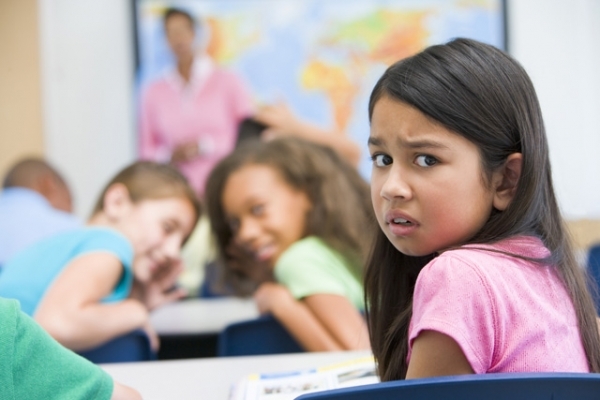
Cynthia is a 9-year-old brunette with wide eyes and a nose that crinkles when she smiles. She likes to wear headbands and enjoys soccer. There are no marks on her as far as I can see that would make her a target for bullying. But, "some girls at my school don't like me," she admits. "And I never even did anything to them."
She recounted one story very poignantly. When her mom forgot her lunch one day, and her teacher forgot to tell her about the lunch her mom had later dropped off, Cynthia sat at the lunch tables hungry. After waiting 15 minutes into her lunch, she purchased pizza at her school cafeteria. While Cynthia left her opened lunch to grab utensils, some of the girls in her class came by and told her that a boy, who had just picked his nose, touched her pizza.
"Are you sure he put boogers on my pizza?" she asked.
"Yes, we're sure," they responded.
Cynthia threw away her lunch reluctantly. Then the huddled group of girls burst into laughter and told her he never actually touched her pizza. She discarded her lunch for nothing. Cynthia burst into tears, ran away and sat in a corner feeling ostracized, humiliated and hungry. Not a good combo.
This type of bullying known as relational bullying exists in many nuanced forms. A bully or bullies can use the silent treatment to ignore someone, exclude someone from the group for long periods of time, gossip or spread rumors, say hurtful remarks about another child within earshot, make friendships conditional by using phrases like, "I'll only be your friend if..." Or they can simply play a joke on someone for the purpose of humiliation, as in the case of Cynthia.
Relational bullying, which affects more girls than boys, usually goes undetected by teachers and even parents. It doesn't involve physical abuse or name calling. And it's hard to pinpoint bullies when they're often called "friends." But it's common and insidious, and can have long-lasting psychological effects. To make matters worse, many kids won't tell anyone for fear of becoming a loner at school.
If you suspect that your child is the target of relational bullying, here are some tips to help your child cope and hopefully nip this type of bullying in the bud.
Pay attention to signs
Since most kids shy away from telling anyone, look for telltale signs: staying in their rooms for long periods of time, not playing with friends they used to, or not wanting to go to school.
Open up communication
If your child is exhibiting any of these signs or just behaving differently, gently approach him without blame. Don't be quick to provide solutions. Just listen. Let them know they don't deserve it and that it's not their fault.
Develop a game plan
Make this a joint effort between you and your child. Something as simple as walking away or saying "this isn't fun, lets go play a game," can be an easy way to avert the situation. Bullies get off on seeing a reaction. So encourage your child to stay cool, calm and collected.
Teach Forgiveness and Empathy
As tempting as it may be, don't retaliate by throwing a dirty look the next time you see the bully, or ring in an angry phone call to the kid's parents. At least not right away. Keep in mind that many bullies are victims too. Often times they're projecting some form of aggression in their own lives. And many bullies are minions of other bullies who are themselves being bullied. (Yes, it's an organized network of crime). They may be afraid that if they don't play along, they'll be made targets too. Rather, encourage pro-social behaviors in your child. Teach your child not to hold a grudge and to play with everyone, even those being ostracized. They'll soon form an alliance, making them less likely to be a target in the future.
Seek outside help
Involve a school administrator or teacher. But don't settle for someone that the school has assigned if they aren't showing much interest in the situation. Reach out to someone who really seems to care. The more you can get involved in your child's school, the easier it will be to find someone to reach out to.
Have multiple social groups
One of the best defenses against the damaging effects of relational bullying is for a child to have different groups of friends. Whether your child is participating in sports, a church youth group, art class or drama class, these different sources of social interaction builds a child's confidence and allows a child not to put all of their social eggs in one basket.
Develop a strong sense of self
If your child feels good about himself most of the time, they'll be less hurt by bullying and less likely to bully as a means for group approval. Involve them in activities they enjoy and that they're good at. And don't forget to provide an environment of love and acceptance at home.